In Colorado Springs, water and foundations are tied together. The same water that seeps through a basement crack also soaks the clay next to the wall, and the Colorado Geological Survey says expansive soil can swell 10 percent or more when it gets wet. So a wet basement here is two problems: the water itself, and what that water does to the soil holding up the house.
Colorado Springs Foundation Repair Help is an independent referral service, not a foundation repair company. A request through this site goes to an independent contractor who serves Colorado Springs and does basement waterproofing and drainage. The contractor finds where the water is coming from, explains the options and gives you a price before any work begins. The referral is free. Callbacks and on-site availability vary.
When Water Shows Up
The National Weather Service's Colorado Springs normals (1991 to 2020) show 15.91 inches of precipitation a year, with the wettest months July (3.12 inches), August (2.96) and June (2.27), plus about 32.5 inches of snow. Afternoon storms in summer and melting snow piled against the house in spring are when most basements show their weak spots.
Outside Fixes First
CGS's homeowner booklet, Home Landscaping and Maintenance on Swelling Soil, gives specific guidance:
- Grade: the recommended fall in the first 10 feet from the house is 10 percent, or 12 inches; planted areas at least 6 inches in 10 feet.
- Downspouts: water "should be discharged no closer than 5 feet from the foundation."
- Sprinklers: "should not spray any closer than 5 feet from the foundation."
- Plants: no flowers or shrubs within 5 feet unless very low water and hand watered; trees at least 15 feet away.
- Backfill: tamp settled soil next to the house and add soil to keep the slope.
- Gutters: check them twice a year.
Colorado State University Extension's PlantTalk on expansive soils repeats those distances and warns against removing downspout extensions to water beds next to the house. You may see advice online to water the soil beside a foundation during dry spells; the Colorado guidance above says to keep that water at least 5 feet away. These steps cost little and should come before, or alongside, any interior system.
Interior Drains and Sump Pumps
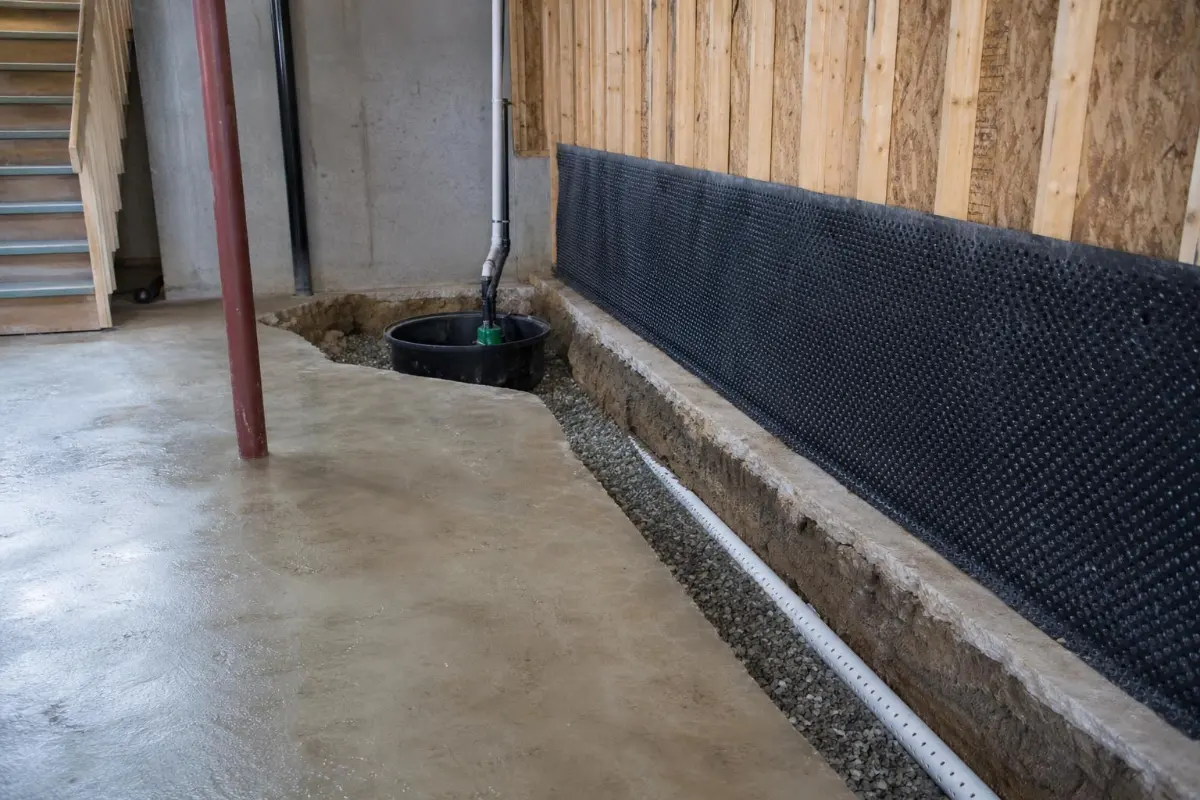
CGS's guide to building on swelling soils describes perimeter drains of perforated pipe set in gravel that carry subsurface water away from a foundation. When a house has no working drain, or water still gets in, an interior drain is a common fix: the contractor cuts a channel along the inside edge of the basement floor, lays perforated pipe in gravel, and runs it to a sump pit where a pump lifts the water out and away from the house. Ask where the sump will discharge. Pumping water out only to have it run back toward the foundation defeats the purpose, so the discharge should follow the same 5 foot rule as downspouts or better.
Exterior Waterproofing
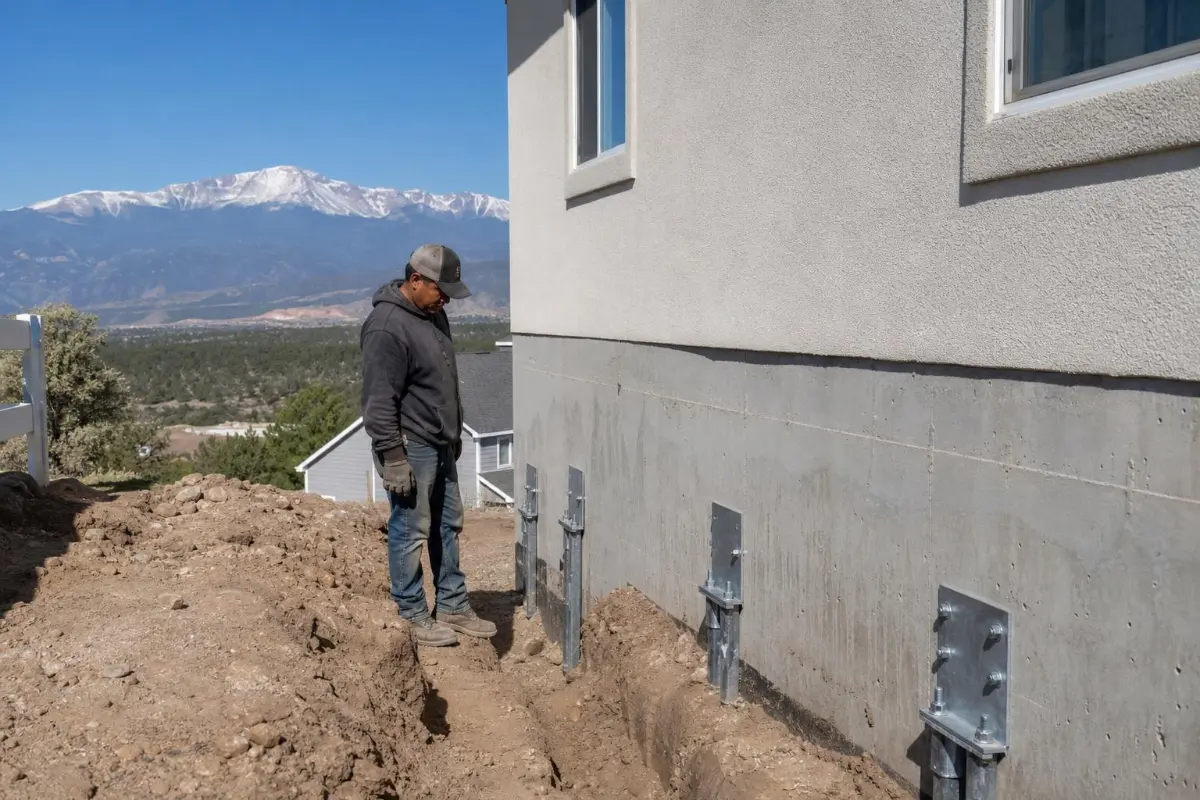
Exterior waterproofing means digging along the outside of the foundation wall, applying a waterproofing membrane or coating, adding drainage and backfilling. It treats the wall from the side the water comes from, but it is more disruptive and costs more. On steep lots in landslide-susceptible areas, the city's geologic hazard code lets the City Engineer request a site study when drainage is changed or digging goes deeper than 3 feet on a slope of 15 percent or more, so ask your contractor whether that applies.
What Waterproofing Costs
The contractor sets the price. These figures are guides:
- Colorado Springs: This Old House's Colorado Springs page (updated April 18, 2024) lists waterproofing at $3,134 and leak repair at $2,837.
- Waterproofing, national: $2,000 to $7,000 (HomeAdvisor, labeled 2025) and $2,400 to $7,000 (Fixr, updated January 27, 2026). Fixr puts leak repair at $2,000 to $10,000.
- By method, national (HomeGuide; the page does not date its data, figures for 750 to 1,000 square feet): interior waterproofing $4,500 to $10,000, exterior $10,000 to $15,000, an interior French drain $40 to $85 per linear foot, sump pump installation $600 to $2,500, and epoxy crack injection $250 to $800 per crack.
Basement size, how much of the perimeter needs drainage, finished walls that have to come out, exterior digging and access, and the pump and discharge setup all move the price.
Permits
PPRBD's disaster page says: "Typically, flood/water damage does not require a permit unless there is structural or foundation damage." PPRBD's permit-exempt list includes no waterproofing item, and retaining walls over 4 feet need a permit. Ask the contractor whether your job needs one; if it does, the contractor must be licensed with PPRBD to pull it.